Thought 011 · Field note · 2 min · August 7, 2026

Not our data

Every new hire picked a dataset. The point was never the analysis.

On an onboarding ritual that survived a team growing from one to seventeen.

As my team grew from one to seventeen, there is a part of onboarding that has never changed: every new hire picked a dataset and analyzed it.

Not our data. An interesting dataset they’d find across the web.

The point wasn’t the analysis. It was a safe, exploratory place to start — a way to meet the team and learn our tools without also fighting the complexity of our business data.

The new hire picked the dataset — Airbnb rentals, exoplanets, air quality, New York squirrels. Then they had to reach out to the team and their questions served as the requirements. Then we’d all meet and the findings would be presented in fun and interesting ways.

It’s a fun way to on board and bridge gaps.
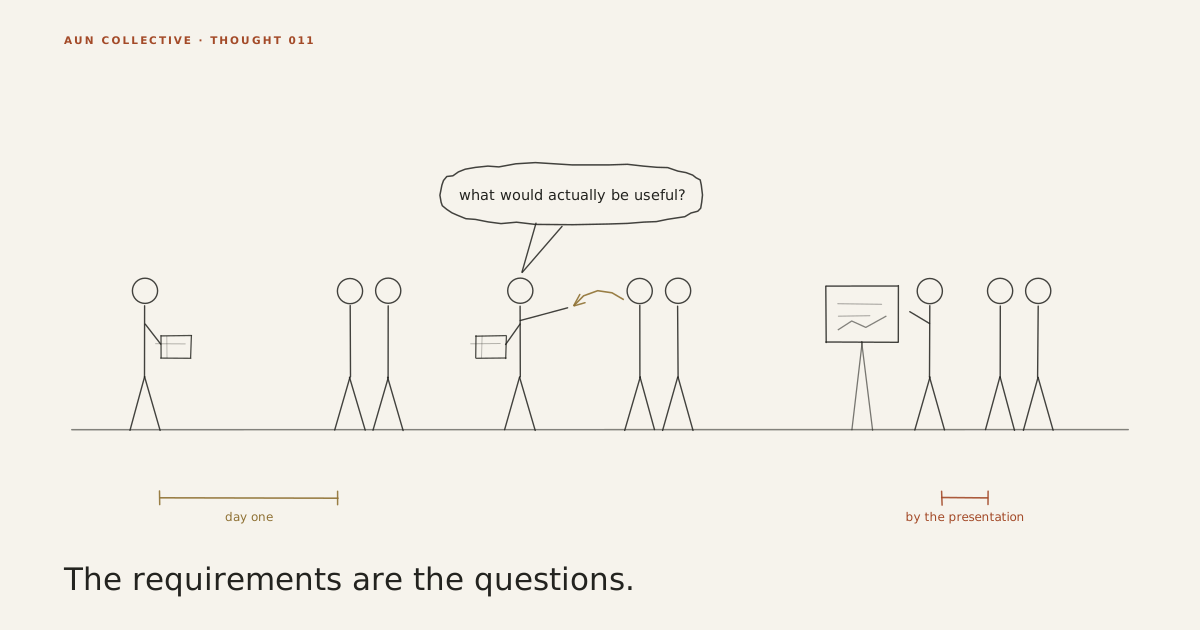
A line drawing in three beats, all standing on one shared ground line. In the first beat a stick figure carries a small box of data and stands far from two other figures; a gold dimension line measures the wide gap between them, labelled day one. In the second beat the figure, now much closer to the two, reaches out a hand and asks in a speech bubble, what would actually be useful? — and a gold line curves back from them into the open hand. In the third beat the figure stands at a board of findings, gesturing at it, with the two others close alongside; the sliver of gap that remains is measured in clay and labelled by the presentation. Below, the words: the requirements are the questions.
Day one, the ask, the presentation. The gap is the thing being measured.

Everyone’s personality and approach comes out through the exercise, and encourages the bonding to happen early.

I’m curious — what data would you use?

How this was made

The words are mine, drawn out a line at a time in conversation with Claude Code (Claude Opus 5) in August 2026 rather than drafted in one go. That mattered: the sharpest part of the piece — that reaching out to the team was the requirements — only surfaced on the fourth or fifth pass, and would have been lost in a first draft written for me.

The drawing was made in the same session as SVG, in the site’s palette and type, with no photography and no image generation. It took three passes. The first put a single measurement under the whole card, which measured the drawing rather than the claim. The second measured all three beats, but then a label was saying out loud what the picture already showed, and one of them had to go. What shipped measures the gap only at its two ends — wide on day one, a sliver by the presentation — and lets the middle beat carry the ask as dialogue.

← Back to Thoughts