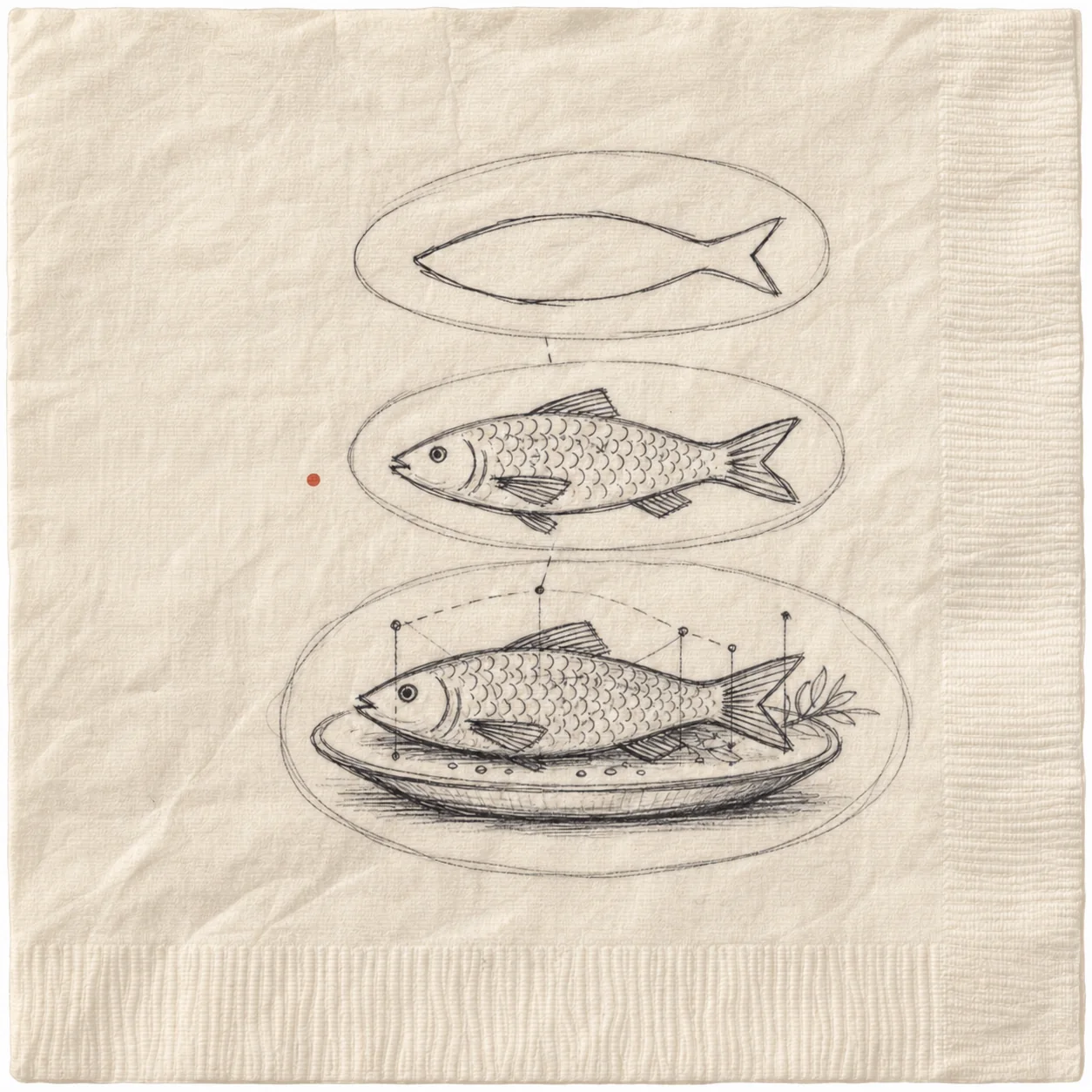
There is an old teaching story about a naturalist who placed a preserved fish in front of each new student and gave one instruction: look at your fish.
He sent every report back with the same instruction, sometimes for days — until the student finally noticed the symmetry and structure that had been sitting in plain sight from the beginning.
What I like about the story is its refusal to confuse new with valuable.
Insight comes, more often than not, from looking at what’s been on the table all along, in front of everybody.David McCullough
When an organization gets stuck, the reflex is often additive: another platform, another dashboard, another hire, another framework, another initiative. Sometimes those things are necessary. But adding something can also be an easy way to avoid looking harder at what is already there.
What could we accomplish with the people, evidence, tools, and constraints already in front of us? What patterns have become too familiar to notice? What is the recurring friction trying to tell us? Which answers are hiding inside workarounds, side conversations, and data everyone has learned to accept?
Analytics, at its best, is disciplined looking.
It brings what is present into focus. It moves past the first explanation, changes the angle, and keeps asking until the ordinary material begins to reveal structure.
AI can give us more lenses. It can surface patterns, connect material, challenge an assumption, or help us see a familiar problem from an unfamiliar position. It can also give us faster answers to a question we have not looked at closely enough.
The point is not to resist new tools. It is to remember what the tool is for.
Before adding another platform, model, hire, or initiative, ask what the existing system is already trying to show you.
Look at your fish. Then look again.