Thought 005 · Read · 3 min · July 22, 2026
AI became a verb.
AI stopped being something companies have. In their own letters, it became something they do — and something that does.
Prompted by Netflix’s Q2 2026 shareholder letter and a broader census of S&P 500 shareholder letters.
Netflix says it is “leveraging technology to improve every aspect of our service and our business.”
I wanted to know what that actually meant — so I read the letter. Three AI use cases: natural-language search, so members can find things in plain words; GenAI across roughly 300 titles, mostly in post-production; and AI running through its ad business. Find it, make it, sell it.
That got me curious. What is everyone else saying they do with it?
So I pointed a multi-agent workflow at the S&P 500 and had it read every qualifying shareholder letter since Q3 2025. The interesting part wasn’t how often AI showed up. It was what they said it was doing.
Writing code. Settling claims. Finding fraud. Documenting patient visits. Taking restaurant orders. Designing proteins. Planning inventory.
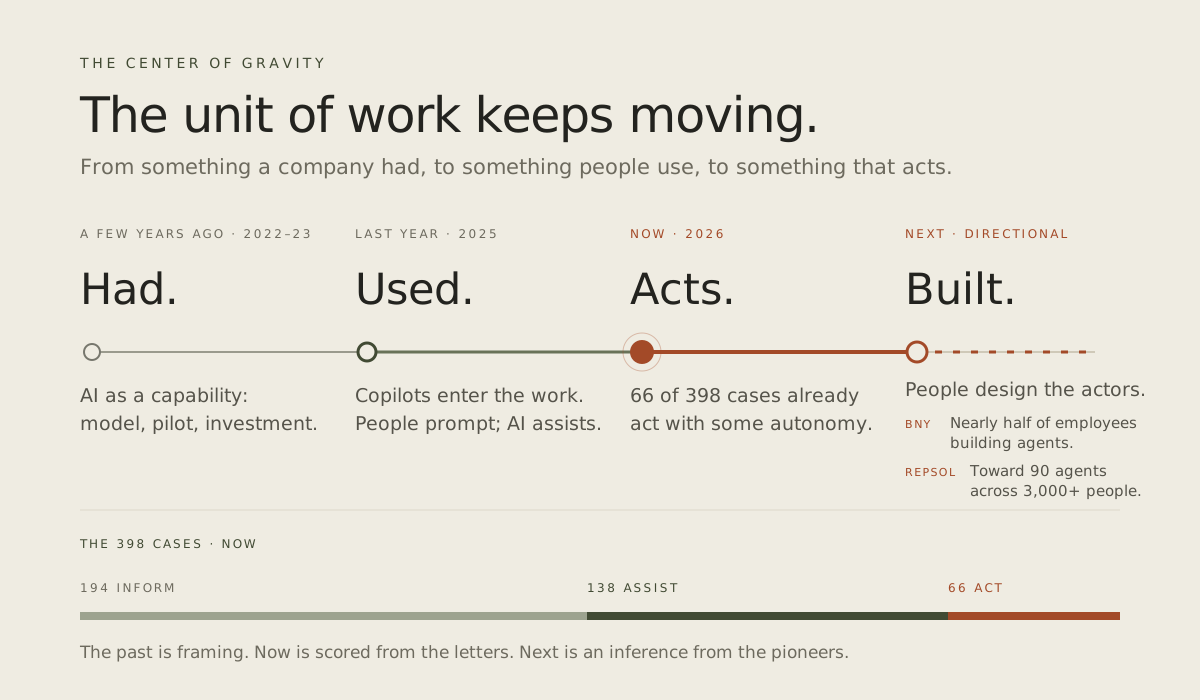
The letters trace an arc. First companies had AI — an investment, a capability, a line on a slide. Then people used it. Microsoft points to Mercy, where its tools saved caregivers more than 100,000 hours documenting physician visits. The AI takes the notes; the caregiver stays with the patient.
Now AI acts. The line that matters isn’t what the system knows anymore — it’s what it’s trusted to change. And then a few go further: the people closest to the work start to build the actors themselves.
The job is shifting from do the work.It’s becoming build the thing that does the work.
That’s the shift I’d watch. Not how much AI a company can list — anyone can list. Whether it can name the work precisely enough to pick the right tool, and set the boundaries around what that tool is trusted to do.